

That decisive detail is the break — the way the hem rests, or doesn't, against the shoe. A clean break, a slight break, a full break or a contemporary cropped finish each tell a different story about the man who wears them. Below, we walk you through every length a discerning gentleman should know, when to reach for each, and how to read your own proportions so the choice becomes instinctive rather than guesswork.
The hem is the final punctuation mark of a well-composed silhouette — get it right, and everything above it reads with intention.
Explore the IsuiT men's trousers edit
1. First, Understand What “The Break” Actually Means
Before choosing a length, it helps to speak the language. The break is the gentle fold of fabric created where the front of the trouser leg touches the top of the shoe. The longer the hem, the more pronounced the fold; the shorter the hem, the cleaner the line from waist to floor. Every length on this list is simply a different amount of break, dialled up or down to suit occasion, body and mood. If you would like to see how these proportions translate across fabrics and seasons, our curated men's trousers selection is the natural place to begin.
One more truth worth internalising: almost no man finds a perfect hem straight off the rack. Only 3% of men report that off-the-rack size standards match their actual measurements, which is precisely why the final length is set on the body, not on the hanger. Treat the numbers below as a starting point, then let a tailor refine the last few millimetres.
2. No Break — The Sharpest, Most Contemporary Line
With no break, the trouser hem stops just as it reaches the shoe, grazing the top of the laces without folding. The result is a long, uninterrupted vertical line that flatters the leg and feels distinctly modern. It is the choice of the man who appreciates a slim-to-tailored cut and wants his tailoring to look intentional from every angle.
This length rewards trousers with a refined taper, and it pairs beautifully with sleek Neapolitan tailoring. Because there is nowhere to hide, precision matters: the hem should sit confidently, never riding up when you walk. Reserve the no-break for a slim silhouette and a sharp leather shoe, and it becomes the most photogenic length of all.
3. The Slight Break — Timeless and Universally Flattering
If there is a single length that suits nearly every gentleman, it is the slight break. Here, the hem touches the shoe just enough to create one soft, shallow fold at the front. It is elegant without being severe, relaxed without losing structure — the diplomatic answer to almost any wardrobe question.
The slight break is the spine of a versatile wardrobe, equally at home with a business suit and a pair of soft, refined cotton trousers worn open-collared. For most men building their first considered rotation, this is the length to default to: forgiving of minor height differences, kind to a range of shoe styles, and quietly correct in any setting.
4. The Full Break — Classic Formality with a Relaxed Air
The full break is the most traditional of the four. The hem rests generously on the shoe, producing a deeper fold — sometimes two — and a softer, more stately line. It carries an old-world gravitas that suits heavier wool suits, double-breasted jackets and the formal end of the calendar.
This length looks its best on a fuller, more classic trouser cut and on taller frames that can carry the extra fabric without it pooling. Worn with a substantial structured trouser and a polished oxford, the full break signals an unhurried, established kind of elegance. Keep the pooling restrained, however; generosity should read as confidence, never as a hem that has simply grown too long.
5. The Cropped Length — Modern Ease for Warm-Weather Tailoring
At the other extreme sits the cropped hem, finishing above the shoe to reveal a sliver of ankle — or a deliberately styled sock. It is the most contemporary look on this list, made for linen, lightweight cotton and the relaxed sprezzatura of summer dressing. Paired with loafers or suede sneakers, it feels effortless yet entirely intentional.
Cropped trousers thrive in fresh, breathable cloth, which is why the lighter Neapolitan models wear it so well. The key is restraint: a clean crop reads as confident editing, while too short a hem tips into novelty. For the gentleman who has mastered the classics and wants to signal a modern sensibility, this is the length to experiment with.
6. How to Choose Based on the Occasion
Length is contextual. For black tie and formal business, lean toward the slight or full break — the softness reads as decorum. For creative offices, evening drinks and the modern tailored look, the no-break delivers that crisp, deliberate edge. For weekends, resort dressing and the warmest months, the cropped finish offers ease without surrendering polish.
A practical approach is to assign lengths to wardrobes rather than to single garments. Your formal trousers settle into a slight break; your sharpest suits and standout separates take the no-break; your linen and holiday pieces embrace the crop. Build the rotation this way and you will always reach for the right proportion without a second thought.
7. How to Choose Based on Your Silhouette
Your own proportions should guide the final decision more than any trend. Taller gentlemen can carry a full break gracefully, since the additional fabric balances the length of the leg. Shorter or slimmer men benefit from a no-break or slight break, which elongates the line and keeps the silhouette clean. The width of the trouser leg matters too: a slim taper begs for less break, while a fuller cut welcomes more.
Footwear completes the equation. A sleek leather shoe flatters minimal break; a substantial brogue or boot accommodates a deeper one. When in doubt, photograph yourself standing naturally — the camera reveals pooling and rise that a mirror often forgives. For trousers with a modern stretch and an easy line, the Marco Pescarolo gray lycra and cotton pants are a study in how cut and length work together, while the Luigi Borrelli light blue cotton pants show how a refined hem elevates even the most relaxed palette.
8. Trousers Worth Building Your Proportions Around
A curated selection of trousers by IsuiT, designed for those who seek perfect proportions and flawless lines — precise cuts, studied fits and the details that make all the difference, from the classic break to the contemporary cropped look. Each of the four models below was chosen to show how length and cloth conspire to create a sharp, intentional fit.
-
Barba Napoli Blue Virgin Wool Pants
Shop now: Barba Napoli Blue Virgin Wool PantsRegular price €310,00 Sale price €165,00Elegant virgin wool with a refined drape, made to hold a slight or full break with quiet authority. The dependable foundation of a formal rotation.
-
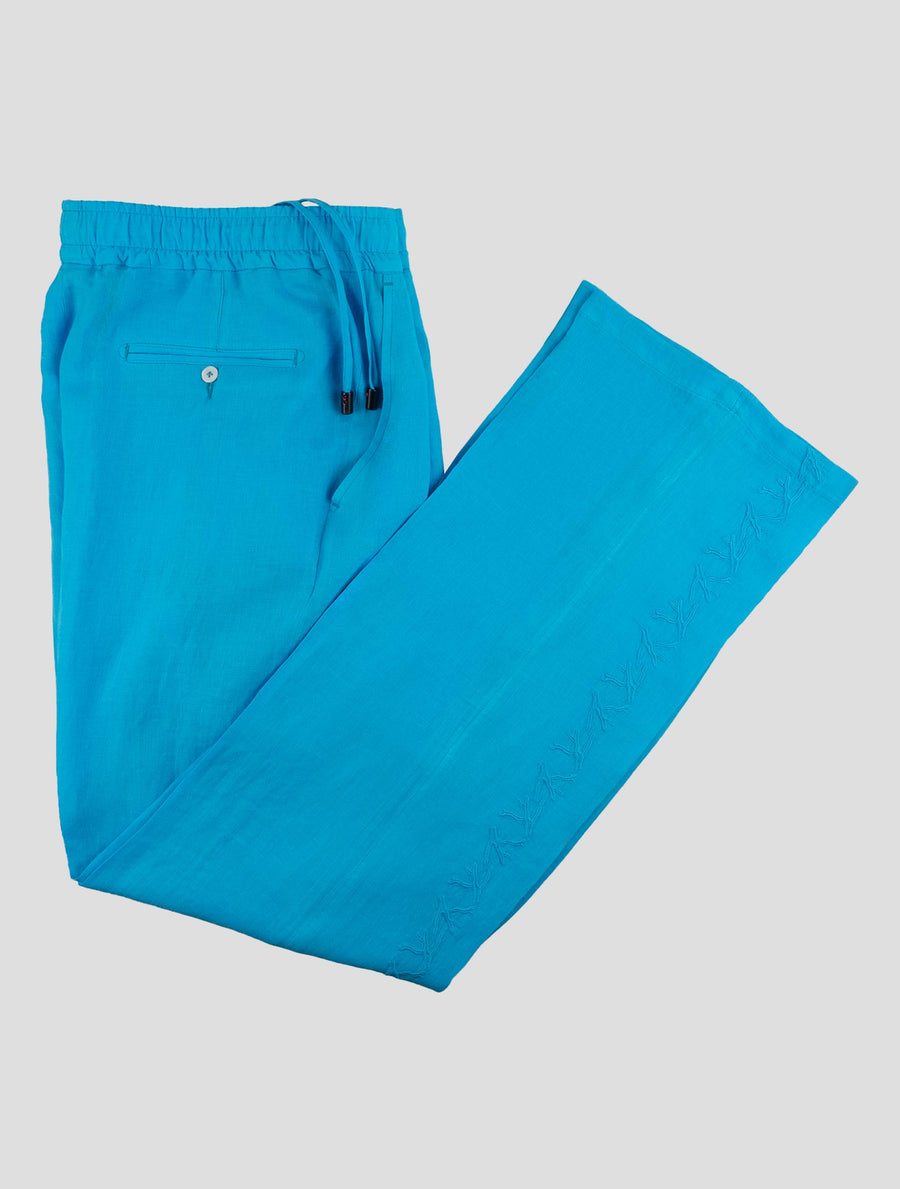
Shop now: Isaia Light Blue Linen PantsRegular price €745,00 Sale price €521,50
Fresh, breathable linen built for the cropped, ankle-grazing summer line. Effortless ease with Neapolitan finesse.
-

Kiton Taupe Lyocell Cotton Ea Pants
Soft lyocell and cotton with a fluid hand that falls beautifully into a slight break. Versatile from desk to dinner.
-
Cesare Attolini Blue Cotton Ea Jeans
Shop now: Cesare Attolini Blue Cotton Ea JeansRegular price €560,00 Sale price €224,00A versatile cotton five-pocket that takes a clean no-break with sharp, modern ease. Tailored attitude in a relaxed register.


9. Fabric, Drape and the Final Centimetre
No length lives in isolation from the cloth that carries it. Crisp wool holds a defined fold and suits the slight or full break; soft lyocell and cotton blends fall fluidly and flatter a cleaner line; linen creases by nature and belongs with the relaxed crop. Reading the fabric before fixing the hem is the mark of a practised eye, and it is why the same gentleman might wear three different lengths across a single week without a hint of inconsistency.
Above all, resist the temptation to set every trouser to the same measurement. The hem should respond to the rise, the taper and the shoe it was made to meet. A few millimetres adjusted by a skilled tailor will do more for your silhouette than almost any other alteration — and it costs only attention.
10. Making the Right Length Second Nature
Choosing the right trousers length is less a rule to memorise than an eye to develop. Learn the four breaks, match them to occasion and silhouette, respect the fabric, and trust a good tailor with the last few millimetres. Do this consistently and the decision stops feeling technical — it becomes the quiet instinct that separates a man who simply gets dressed from one who is, unmistakably, well dressed. When you are ready to refine your own proportions, the tailored trouser collections at IsuiT are designed to take that final centimetre seriously.


