

In a landscape crowded with fast-fashion alternatives and off-the-peg imposters, the offerings from houses such as Giampaolo, Isaia, and Kiton represent something altogether different: a considered philosophy in which the garment exists to serve the man, not merely clothe him. Whether you are dressing for a boardroom negotiation or a black-tie ceremony, the choice of an Italian suit from a curated multi-brand atelier is the clearest statement of intention a man can make.
"Flawless tailoring, high-quality fabrics, and meticulous craftsmanship: an Italian suit does not simply dress a man — it declares, without a word, exactly who he is."
Explore the full IsuiT collection of Italian tailored suits
The Fabric Question: Why Wool Is Non-Negotiable
Any honest conversation about the best Italian suits for the workplace must begin with cloth. Virgin wool — fibre shorn once from a sheep and processed without recycling — sits at the apex of suiting fabric for one simple reason: it breathes, drapes, and recovers in a way that no synthetic can credibly imitate. The finest Italian mills in the Biella valley have spent generations engineering yarns of extraordinary softness and resilience, and the houses that make use of them inherit that legacy with every length they cut.
For the professional man, a Super 120s or 130s wool weave strikes the ideal balance between luxurious softness and practical durability. These weights hold a crease through a long working day, resist the inevitable indignities of travel, and recover overnight with nothing more elaborate than a wooden hanger. The Giampaolo Light Gray Wool Suit exemplifies precisely this standard: a finely woven plain-weave wool in the most versatile of formal colours, structured just enough to command authority without sacrificing the easy movement that a full day demands.
Light grey, as a choice, is rarely wrong. It reads as authoritative yet approachable, projects confidence without aggression, and serves as an impeccable canvas for accessories ranging from a crisp white pocket square to a richly coloured silk tie. It is, in every sense, the working gentleman's first suit.
Isaia and the Art of Sophisticated Personality
Where Giampaolo commands through restraint, Isaia operates with an entirely different energy — one of bold, considered personality. The Neapolitan house, founded in 1957 and now helmed with extraordinary consistency by Gianluca Isaia, has always understood that a suit can be serious without being severe. Its cloths tend toward richer tones and subtler textures: tonal stripe, fine herringbone, the kind of visual interest that rewards a second glance without demanding it.
The Isaia Gray Wool Suit available through IsuiT represents the house at its most distilled: a pure wool cloth with that characteristic Neapolitan softness — shoulders that roll rather than pad, a chest that draws gently rather than stiffens — giving the wearer a silhouette that feels genuinely individual rather than assembled from convention. For formal occasions where the dress code allows the personality of the suit to register, Isaia is without equal in this tier.
What separates Isaia's construction philosophy from lesser houses is its unwavering commitment to the spalla camicia — the shirt shoulder — and a lapel roll that originates not from a pressed crease but from months of careful basting. These are details invisible in a photograph and unmistakeable in person, which is precisely the point. Elegance at this level is always felt before it is seen.
Boardroom Dressing: Principles for the Professional Context
The boardroom suit operates under a specific set of social codes that the finest Italian tailoring respects instinctively. Authority must be communicated; approachability must be preserved. The solution, arrived at over centuries of Milanese and Neapolitan tailoring, is a suit of quiet confidence: a controlled silhouette, restrained pattern, and impeccable fabric quality that registers subconsciously rather than confronting directly.
In practice, this means single-breasted two-button or three-roll-two jackets in charcoal, mid-grey, or deep navy. Trousers with a gentle taper — never drainpipe, never excessively wide — finishing cleanly on the shoe without pooling. The jacket length should cover the seat comfortably, with enough room in the chest to button without distortion and enough suppression in the waist to suggest form without restriction.
Paired with a fine cotton shirt — such as the Luigi Borrelli Light Blue Cotton Shirt "Fabio", hand-finished in Naples with meticulous attention to collar construction and placket stitching — the boardroom suit becomes a complete statement of professional authority. Light blue remains the shirt colour that works hardest across the widest range of suit tones, from pale grey to deep charcoal, without ever appearing to try.
The Occasion Suit: Dressing for Ceremony and Celebration
The demands of a formal occasion differ materially from those of the professional week. Here the objective is not authority but elegance — an unhurried, considered elegance that signals both understanding of dress codes and confidence in one's own aesthetic. The suit chosen for a wedding, a formal dinner, or a cultural evening must carry more visual weight while remaining perfectly in command of itself.
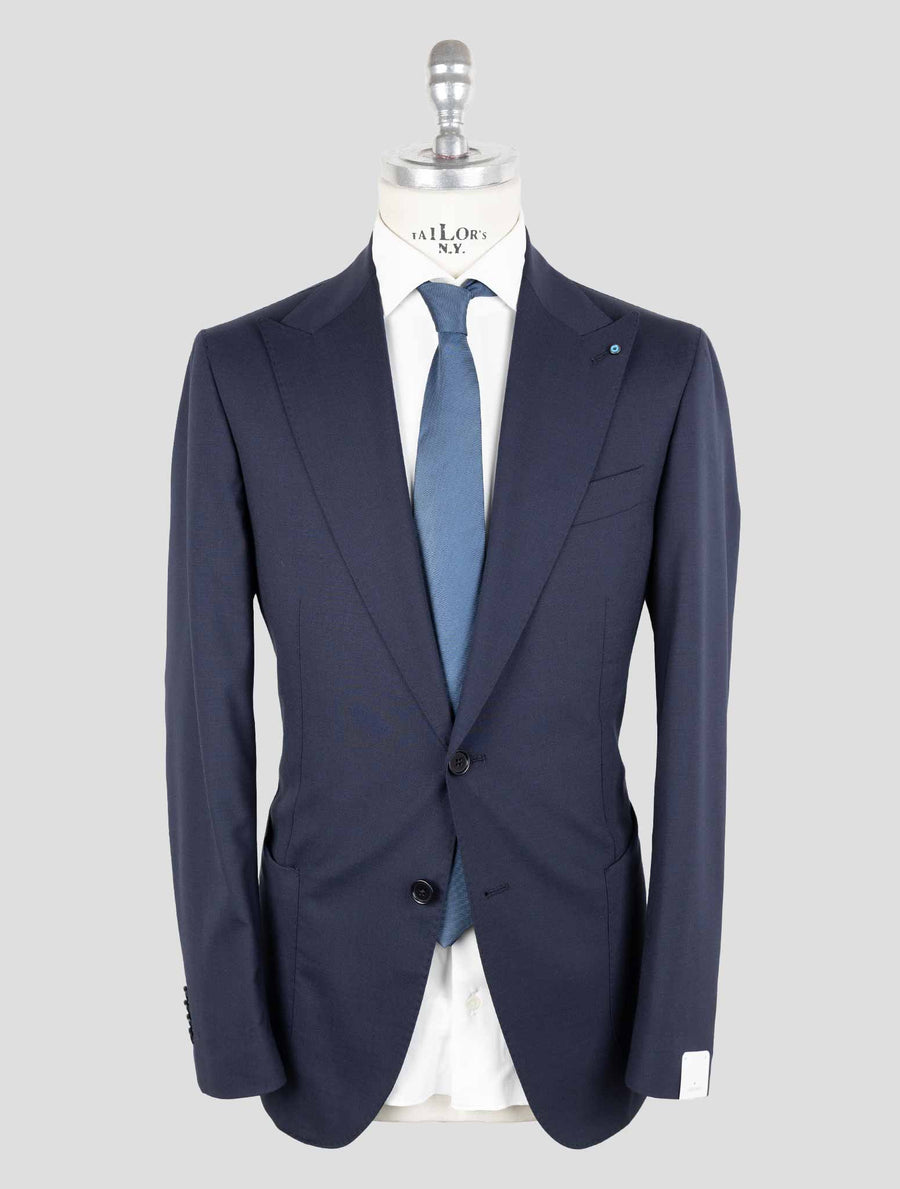
Navy presents the ideal solution. Deeper and more ceremonious than grey, it photographs magnificently, flatters virtually every complexion, and holds its formality across the full arc of an evening. The Giampaolo Blue Wool Suit captures precisely this quality: a rich, saturated navy in a fine plain-weave wool that absorbs candlelight beautifully and maintains its structure across hours of wear. It is a suit that rises to the occasion — never overwhelms it.
For such evenings, the Isaia Dark Brown and Blue Silk Tie offers a masterly tonal solution: the blue harmonises with the suit cloth while the dark brown introduces exactly the depth and warmth that an occasion tie demands. Silk at this weight has a presence — a subtle lustre — that polyester cannot approach, and the Isaia weave reveals its quality most eloquently when paired with a suit of comparable pedigree.
The Essential Edit — Four Pieces for the Considered Italian Wardrobe
-
Giampaolo Light Gray Wool Pl Ea Suit
Shop now: Giampaolo Light Gray Wool Pl Ea SuitRegular price €1.650,00 Sale price €400,00Fine plain-weave virgin wool · Full canvas construction · Neapolitan shoulder
-
-
Giampaolo Blue Wool Pl Ea Suit
Shop now: Giampaolo Blue Wool Pl Ea SuitRegular price €1.650,00 Sale price €400,00Rich navy plain-weave wool · Full canvas · Ideal for formal occasions
-



The Kiton Standard: When Craft Becomes Absolute
No editorial examination of the best Italian suits for formal occasions can conclude without addressing Kiton — the Neapolitan house that operates, by common consensus among connoisseurs, at the absolute pinnacle of ready-to-wear tailoring. Founded in 1956 by Ciro Paone, Kiton has never compromised on its founding principle: that a suit should require approximately 25 hours of hand-work to complete. This is not marketing language. It is a production reality that results in garments of a quality so distinct they occupy an almost different category of object.
The Kiton Brown Leather Dress Shoes, available exclusively through IsuiT, extend this philosophy into footwear: hand-stitched calfskin of exceptional quality, shaped over lasts designed to follow the natural architecture of the foot. Brown in the richest, most polished register — the kind of colour that deepens with age and care, rewarding the attentive owner as a great suit rewards patient wearing. With a navy or grey suit in fine wool, there is no more considered choice of shoe.
Dressing at this level is ultimately about coherence. Each element must be chosen in relation to the others, not in isolation — and the result, when assembled with care, is an effect that cannot be achieved by any single extraordinary piece alone. It is the complete picture that registers. It is the complete picture that endures.
How to Build a Coherent Formal Wardrobe from Italian Heritage Houses
The ambition of a genuine Italian suit wardrobe is not accumulation but curation. Two or three exceptional suits, chosen to cover the full spectrum of professional and formal occasions, will serve a man more comprehensively than a wardrobe of ten mediocre ones. The guiding principle is versatility without compromise: each suit must be distinctive enough to justify its presence and neutral enough to accommodate the full range of shirts, ties, and occasions it will encounter.
Begin with light grey — the Giampaolo wool offering being a natural starting point — and add a true navy as the second pillar. Between these two anchors, a man can address virtually every formal demand placed upon him. A third suit in a richer tone — midnight blue, a deep charcoal with a barely visible stripe — extends the wardrobe into evening and celebration. From these foundations, the accessories do the specific work: a silk tie from Isaia, a precisely coloured shirt from Luigi Borrelli, shoes from Kiton. The architecture becomes, in the truest sense, a capsule.
The Multi-Brand Advantage: Why a Curated Atelier Outperforms a Single House
There is a particular intelligence in shopping a curated multi-brand atelier rather than committing exclusively to a single house. Each great Italian tailoring house has a distinctive voice — a habitual approach to shoulder, lapel width, trouser cut, and cloth preference — that expresses a coherent aesthetic. For some men, a single house will align perfectly with their own. For most, the truest wardrobe is one that draws selectively on several traditions.
IsuiT has been built on precisely this premise: that the man who understands suiting at this level deserves access to Giampaolo's restrained Neapolitan confidence alongside Isaia's textured personality and Kiton's uncompromising hand-craft — not forced to choose one at the expense of another. Wholesale sales for Italian heritage brands surged by 20% in early 2025, outperforming the broader global luxury market, precisely because that selective, informed customer has grown more sophisticated in his expectations and more discerning in his demands.
The question for a man approaching this wardrobe for the first time is not which house to choose, but which occasion to address first. Begin there, and the logic of the collection will reveal itself naturally.
Frequently Asked Questions
What makes Italian wool suits better suited to formal occasions than other fabrics?
Italian virgin wool at the Super 110s–150s grade offers a combination of drape, breathability, and recovery that no synthetic or blended alternative can replicate at the same level. The fibre crimps naturally, which gives the finished cloth a visual depth and a tactile quality that reads as luxury both in person and in photographs. For formal occasions where impression matters acutely, this distinction is decisive.
How do Giampaolo and Isaia differ in terms of cut and character?
Giampaolo tends toward a clean, restrained Neapolitan silhouette: a shoulder with gentle roll rather than pronounced structure, a lapel of classical width, and a trouser that falls with unhurried elegance. Isaia works with a similar Neapolitan foundation but introduces more visible personality — richer cloth textures, slightly wider lapels, and a construction philosophy that emphasises the natural drape of the canvas. Both are exceptional; the choice is fundamentally one of character.
Can the same Italian suit work for both the boardroom and a formal evening occasion?
In many cases, yes — particularly in navy or charcoal. The distinction is made through accessories: a more subdued tie and white shirt for the professional context, a richer silk tie such as the Isaia Dark Brown and Blue Silk Tie and a spread-collar shirt for the evening. A great Italian suit in a considered colour is precisely designed to serve the full spectrum of a man's formal life.
Why are Kiton shoes a meaningful complement to Italian suits at this level?
Footwear is the element most often underestimated in a formal wardrobe, and the most immediately noticeable to anyone who understands dressing. Kiton's dress shoes are constructed with the same philosophy applied to its suits: hand-stitched, shaped over carefully designed lasts, and finished in leathers that improve meaningfully with age and care. They complete a fine Italian suit in a way that a lesser shoe — however expensive — cannot.
How should I approach building an Italian suit wardrobe for the first time?
Start with a single exceptional suit in light grey or navy — the two most versatile formal suit colours — and build from there. Prioritise full-canvas construction, a reliable fine wool cloth, and a brand whose silhouette philosophy aligns with your own proportions. Once the first suit is established, identify what occasions it cannot address and build the second suit to cover that gap. This method produces a coherent, purposeful wardrobe far more effectively than pursuing variety from the outset.


