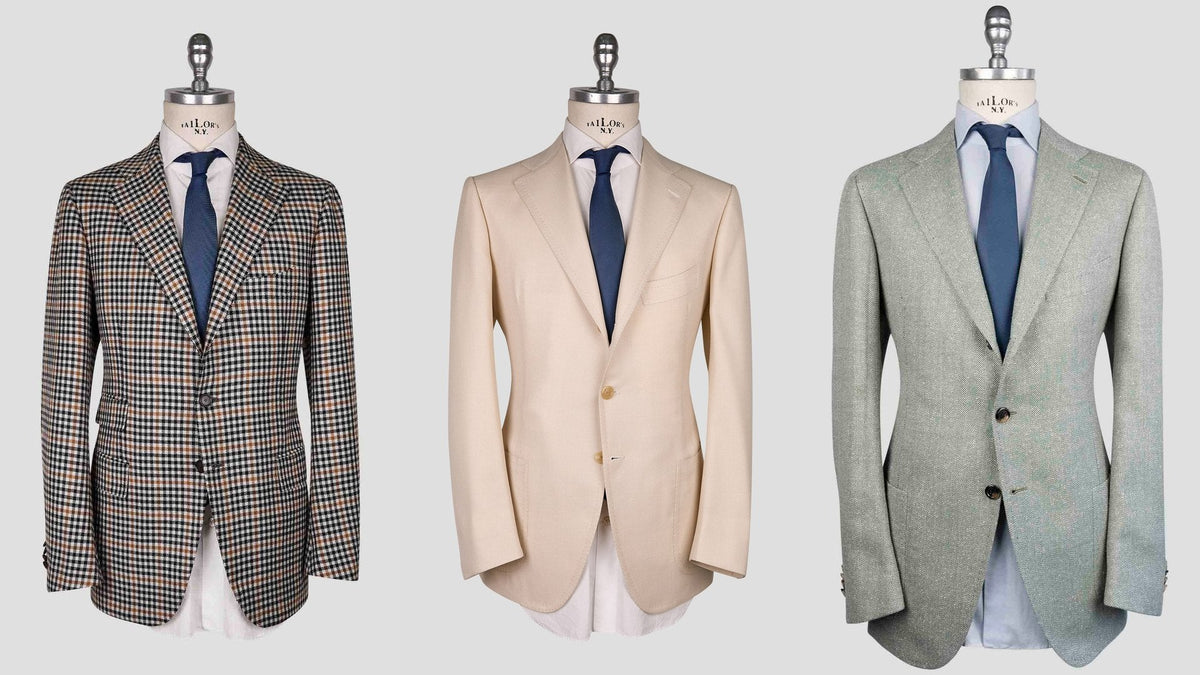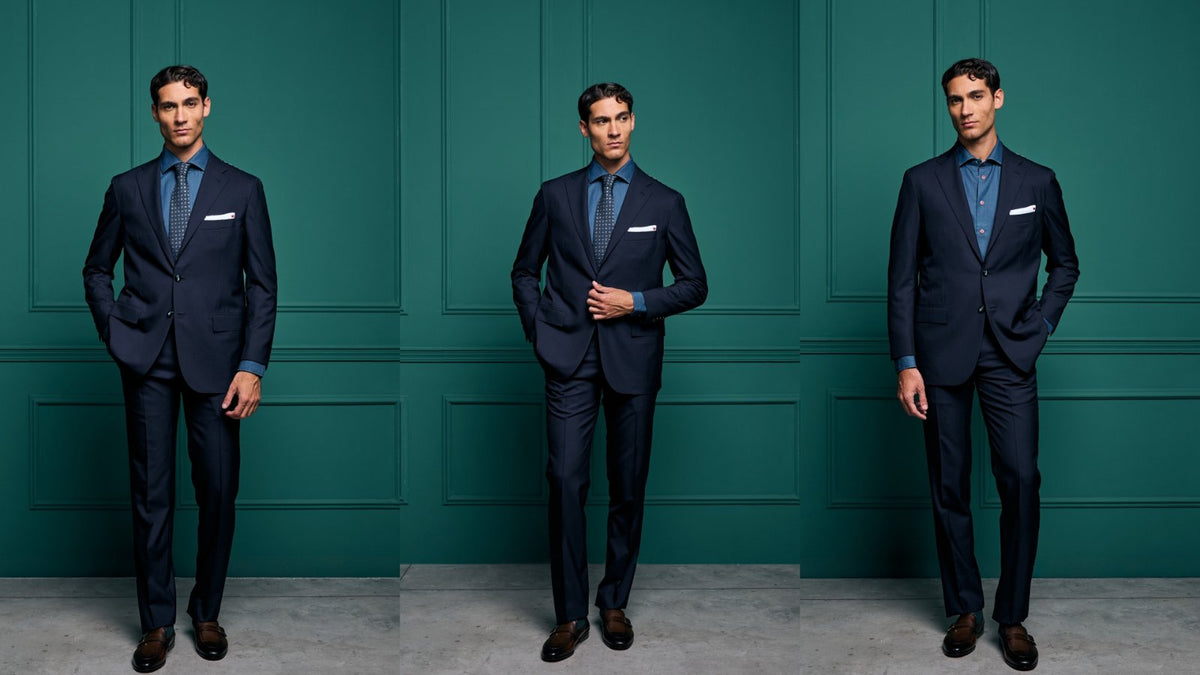
This guide is written for the man who understands that a suit from Naples or Rome carries within its canvas a philosophy — that clothing should serve the wearer, amplify his proportions, and project confidence without effort. From the precision of the shoulder line to the quiet poetry of the trouser break, every element of an Italian suit can be calibrated to your specific frame. Whether you are broader across the chest than you are through the hip, narrow through the shoulder, or carrying a fuller silhouette than the ready-to-wear market typically accommodates, Italian tailoring — with its extraordinary range of cuts, weights, and constructions — offers a solution of uncommon elegance.
"A suit that fits as if it were made for you — because, in the finest Italian tradition, it should be — is not a luxury. It is a necessity of character."
Explore the full collection of Italian suits at IsuiT →
Why Italian Tailoring Understands the Human Form Differently
There is a reason that the great Neapolitan houses — from the ateliers of Chiaia to the workrooms of Via Filangieri — have defined the world's finest tailoring for more than a century. Italian suit-making begins not from a pattern block but from an observation of the body: its weight, its posture, its movement. The result is a garment that accommodates asymmetry, compensates for posture, and works with the natural drape of the fabric rather than against it. When you explore Isaia's approach to the unlined linen suit, you encounter this philosophy made tangible — a garment constructed to breathe, to move, and above all, to fit.
In practical terms, Italian tailoring divides broadly into two traditions: the Roman, which tends toward sharper construction, more formal canvases, and a straighter silhouette; and the Neapolitan, which prizes the spalla camicia (shirt shoulder), the suppressed waist, and a certain studied informality that paradoxically communicates extraordinary refinement. Understanding which tradition suits your body is the first act of sartorial intelligence.
The Shoulder: The One Measurement That Cannot Be Altered
Every tailor of merit will tell you the same thing: you can let out a chest, take in a waist, shorten a sleeve — but you cannot move a shoulder seam without effectively rebuilding the entire jacket. This makes shoulder fit the single most important measurement when choosing an Italian suit from a ready-to-wear or made-to-measure range. The seam should sit at the precise edge of your shoulder joint — not hanging over the arm, not cutting into the muscle. When you raise your arm, the jacket should follow with minimal resistance and no bunching at the back.
For men with narrower or sloping shoulders, the structured Neapolitan shoulder — lightly padded, with a soft roll — can add the visual breadth of a well-proportioned torso without the artificiality of heavy padding. For broader-shouldered men, an unpadded or minimally constructed shoulder allows the jacket to lie naturally without creating a square, architectural silhouette that reads as stiff. The Giampaolo dark blue wool suit exemplifies this balance: a clean shoulder construction that respects the body without overstatement, suited equally to the man with an athletic frame as to one with a more relaxed build.
Chest and Waist: Reading the Silhouette of the Jacket
Once the shoulder sits correctly, your attention turns to the chest. In an Italian suit, the jacket's front should close with the single button resting naturally at the waist — not straining across a broader chest nor gaping open from an overly generous cut. Run your hand between your chest and the lapel: there should be room for a flat hand, but no more. Any tightness that causes the lapels to bow outward or the front to pull into a diagonal X-shape signals that the chest is too small; a chest measurement is the quickest alteration, but only if the shoulder already sits correctly.
Below the chest, the waist suppression of an Italian jacket tells you much about its provenance and intended wearer. Neapolitan tailoring, historically cut for men of athletic build, tends toward pronounced waist suppression — a clearly defined inward curve that flatters the triangular male silhouette. If you carry more weight through the midsection, a suit with less aggressive suppression will lie more comfortably and hang with greater elegance. The Sartorio blue virgin wool viscose suit — crafted in a fabric blend that offers exceptional drape and a forgiving hand — manages this balance with particular grace, its silhouette gently defined without constriction.
Jacket Length and the Proportional Logic of Italian Tailoring
Jacket length is among the most misunderstood elements of suit fit, yet it carries an outsized influence on overall proportion. The classical Italian benchmark — that the hem of the jacket should align roughly with the first knuckle of the thumb when the arm hangs naturally at the side — is a reliable starting point, but not an absolute. A shorter jacket will visually lengthen the leg, lending the appearance of greater height; a longer jacket grounds the silhouette and communicates a more classical gravitas.
For taller men, a jacket that falls slightly longer avoids the appearance of a bolero; for shorter men, the modern Italian tendency toward a slightly abbreviated hem is a genuine flattery. Crucially, in both cases the seat must remain covered — a jacket that rides up to expose the trouser seat looks unfinished regardless of how impeccable the cloth. For the man seeking a suit that navigates these proportions with instinctive ease, the Luigi Borrelli Procida 20 in beige virgin wool offers a jacket length calibrated for the modern Italian aesthetic — contemporary without being abbreviated, classical without rigidity.
Selected from the IsuiT Collection
-
Shop now: Isaia Blue Cotton SuitRegular price $3,444.00 Sale price $2,067.00
-
Sartorio Blue Virgin Wool Viscose Ea Suit
Shop now: Sartorio Blue Virgin Wool Viscose Ea SuitRegular price $1,901.00 Sale price $537.00Wool-viscose blend · Exceptional drape Soft silhouette · Ideal for fuller and relaxed builds
-
Luigi Borrelli Beige Virgin Wool Suit
Shop now: Luigi Borrelli Beige Virgin Wool SuitRegular price $1,901.00 Sale price $448.00Procida 20 model · Virgin wool · Light neutral tone Contemporary length · Suits most body proportions


Lapel Width: The Proportional Mirror of the Chest
Lapel width is, in the simplest terms, a proportional instrument. The width of the lapel should roughly correspond to the width of the tie knot — a rule of harmony that Italian tailors absorbed long before it became a point of style commentary. More importantly for body type, lapel width should relate to chest breadth. A broader-chested man wearing narrow lapels will appear top-heavy, the jacket's front face crowded and visually unresolved. A narrow-shouldered man in very wide lapels may find that the jacket appears to overwhelm his frame.
The peak lapel — a staple of Italian double-breasted construction and increasingly common on single-breasted evening suits — creates a strong horizontal visual line across the chest, which can add perceived breadth to slimmer torsos. The notch lapel, in its medium width, is the most forgiving across body types and the most universal in application. Italian houses tend toward a slightly wider-than-English notch lapel, which reads as contemporary without veering into fashion-forward territory.
Trouser Break and Pant Length: The Final Measure of Elegance
Below the jacket, the trouser carries an equal burden of proportion. The break — the fold of fabric that forms when the trouser hem meets the shoe — has become one of the most debated elements of contemporary suit dressing. The contemporary Italian position, reflected in almost every major Neapolitan house's current collection, is toward no break or the slightest half-break: a clean line from the knee downward that shows the full length of the shoe and reads as both modern and assured.
For taller men, this clean break is particularly flattering, emphasising the length of the leg without interruption. For shorter men, a no-break trouser — worn with a slightly higher rise — similarly elongates the silhouette. Only the fuller-built man with a generous thigh may find that a slight break serves him better, as it introduces a moment of visual pause rather than a continuous line that could emphasise width. The trouser width through the thigh, meanwhile, should be generous enough to move without gripping — the characteristic of Italian trousers is an easy fullness through the seat and thigh that narrows progressively toward the ankle, a cut that flatters almost universally.
Colour and Cloth: Dressing the Body with Intelligence
Fit is primary, but colour and cloth weight play a supporting role in how a suit reads on a specific frame. Darker tones — navy, charcoal, midnight blue — are universally slimming and lend a formal authority that lighter colours cannot replicate. For the fuller-figured man, a dark navy in a lightweight wool or wool-viscose blend creates a silhouette that appears both slender and elegant. For a leaner frame, mid-tones and lighter weights such as cream, stone, and oatmeal add visual substance.
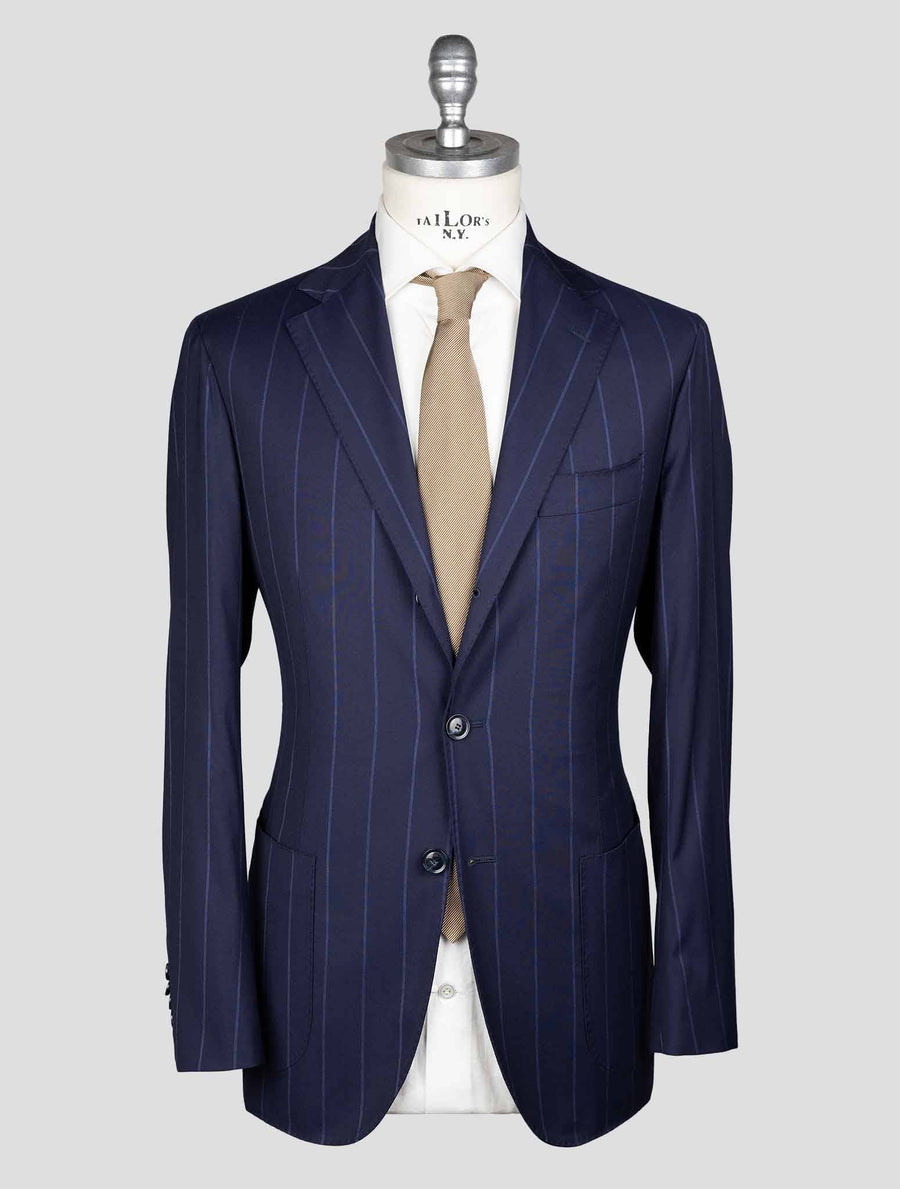
Consider the Sartorio Napoli dark blue and white virgin wool suit as a study in confident contrast: the tonal play between dark ground and fine pale stripe creates a vertical movement that elongates the figure while retaining the depth and formality of navy. Worn with a Kiton white cotton shirt — a cloth of exceptional fineness, its white utterly luminous against the dark suit — the combination reads as complete, assured, and deeply Italian in its precision.
For those drawn to quieter elegance, the Luigi Borrelli Procida 14 in gray virgin wool and silk offers a cloth of almost impossible softness — the silk introduction lending the grey a luminosity that flat wool cannot achieve. The result is a suit that photographically appears understated but, in person, radiates a quiet distinction that only the finest Italian fabrics can produce. Pair it with a Kiton blue cotton shirt, and you have an outfit of perfect tonal harmony: the cool grey suit, the Italian blue shirt, the whole ensemble speaking in a register of measured, unhurried luxury.
The Art of the Complete Outfit: Beyond the Suit Alone
Italian tailoring does not exist in isolation. The suit is the foundation, but the shirt beneath it — its collar spread, its fabric weight, the way its cuffs emerge from beneath the jacket sleeve — is an integral component of the finished picture. A collar that is too wide will be swallowed by broad lapels; a collar too stiff will not lie comfortably beneath the soft roll of a Neapolitan jacket. The Italian tradition favours shirts of extraordinary fabric quality — fine cottons, sea-island weaves, poplin of impeccable tightness — because the suit's refinement demands a shirt of equal intelligence.
In this context, the choice of shirtmaker matters as much as the choice of suit. Kiton's shirts — available at IsuiT in both the classic white cotton and the quietly distinguished blue cotton — represent the pinnacle of Italian shirt craft: hand-stitched seams, mother-of-pearl buttons, and a collar geometry that sits with natural authority beneath any lapel. This is not accessorising. It is completing the thought.
Frequently Asked Questions
How do I know if an Italian suit fits correctly at the shoulder?
The shoulder seam of your jacket should sit at the very edge of your shoulder joint — where your arm connects to your torso. When you stand naturally, there should be no overhang of fabric beyond that point, and no tightness pulling the seam back toward your neck. When you raise your arm, the jacket back may lift slightly, but it should not bind across the back or pull the front open. This is the one measurement that cannot be corrected in alteration, so it should be your first point of evaluation when trying any Italian suit.
Which Italian suit cut is best for a fuller or stockier build?
For a fuller build, look for an Italian suit with moderate waist suppression rather than an aggressively tapered silhouette. A single-breasted jacket with a slightly elongated length will cover the seat elegantly while the longer line draws the eye downward. Fabrics with natural drape — wool-viscose blends, fine flannel — will skim the body rather than cling to it. Avoid very tight chest measurements and instead prioritise a jacket that buttons comfortably with a flat, unforced closure. The Sartorio blue wool-viscose suit is particularly well-suited to this requirement, its fabric and cut working in natural concert.
What trouser break should I choose for a modern Italian look?
The contemporary Italian aesthetic favours no break or a very slight half-break — the trouser hem sitting just above or barely touching the top of the shoe. This creates a clean, uninterrupted line from the knee to the ankle that reads as both modern and confident. If you are taller and naturally long in the leg, no break works particularly well. For shorter men, a no-break trouser worn with a slightly higher rise and a tapered leg will visually extend the silhouette. Only if you strongly prefer a more traditional look — or if the trouser is particularly wide-legged — would a full break be appropriate within the Italian canon.
How does fabric choice affect how a suit fits on the body?
Fabric choice is inseparable from fit perception. A heavier structured cloth — dense flannel or tweed — will hold its shape independently and create a more architectural silhouette, which can add visual weight and structure to a lean frame. A lighter, more fluid fabric — linen, wool-viscose, silk-wool — will drape and move with the body, softening the outline and working with natural movement. For body types where some concealment is desirable, fluid fabrics in dark tones are an excellent choice. For men who want the suit to define and project their frame, a slightly heavier construction in a medium-weight wool will serve that purpose elegantly.
Does lapel width really matter for body type, or is it purely a style choice?
Lapel width has a genuine effect on perceived proportion. A broader chest looks most balanced with a medium-to-wide notch or peak lapel that fills the jacket's front face in harmony with the chest beneath it. A narrow lapel on a broad-chested man makes the suit appear too small and the chest appear even wider by contrast. Conversely, a very wide lapel on a narrow-shouldered man can overwhelm the frame. The practical guidance is to aim for a lapel width of approximately 8–9 centimetres at the widest point for most Italian ready-to-wear suits, and to evaluate it in the context of your own chest breadth when trying the jacket on.
Can I wear a linen Italian suit for formal occasions?
In the Italian tradition, absolutely. Linen — particularly in a dark navy or charcoal — is entirely appropriate for summer formal occasions, garden events, and southern European business contexts. The key is in the construction: an unlined or half-lined linen suit from a house such as Isaia, with a clean shoulder and precise lapels, carries as much authority as a wool suit of equivalent formality. The Isaia blue navy linen suit in the Capri model is a definitive example — a suit that speaks the language of occasion while breathing freely in warm weather, elegant in its restraint and impeccable in its construction.